 NxtPath Login

Key Insights: The Personalized Leader Path and Leader Standard Work
- Leader standard work is a powerful tool for achieving operational excellence across the entire organization. By defining clear expectations and structured leadership routines, team leaders and frontline supervisors can focus on essential leadership activities that support organizational goals and improve performance.
- A daily management system helps leaders stay aligned with strategic priorities and customer value. Through daily, weekly, and monthly routines (such as daily huddles, gemba walks, and visual management) leaders can quickly assess performance metrics, identify gaps, and respond to challenges on the floor.
- Consistent leadership behaviors drive continuous improvement and future performance. When leaders follow standardized work and complete planned tasks consistently, they create stability in management processes and help drive continuous improvement across teams and departments.
- Leader standard work supports better problem solving and communication. Structured activities like coaching employees, reviewing visual boards, and analyzing leading indicators help middle managers and team leads understand root causes, solve problems faster, and improve communication with direct reports.
- Leadership routines help translate strategic goals into daily actions. By connecting strategic alignment with daily tasks and key tasks, leaders create a workplace organization where consistent actions support long-term organizational success.
- Lean management and lean thinking reinforce strong leadership practices. Organizations that implement leader standard work LSW and standardized work systems build a lean culture that supports improving processes, maintaining process standards, and delivering reliable results.
- Effective leader standard work creates visibility and accountability across management levels. When senior leaders, middle managers, and frontline supervisors follow clear leadership tasks and routine tasks, they can quickly assess progress, track lagging indicators, and ensure leaders support teams in achieving strategic priorities.
- Personalized leadership strengthens engagement while maintaining structure. While standard practices provide consistency, leaders create stronger relationships when they adapt leadership activities to individual team members, fostering a deeper understanding of needs and improving daily improvement efforts.
Every leadership role comes with competing pressure: to drive business results and support employees. Many leaders struggle not because of a lack of passion, but because they don't have a clear path to help focus their efforts every day. Here are some practical ways to align leadership skills with the daily challenges teams face.
Supporting Employees Through Regular Interactions
People thrive when leaders invest in meaningful, consistent interactions. A five minute check-in can spark engagement, while a one-on-one conversation can unlock participation. But when interactions are random or uneven, too focused on the familiar or the loudest voices, leaders miss the chance to build trust across the whole team.
Leadership Skills in Practice
Leaders shape better work environments when they:
- Show that making work meaningful is a priority.
- Remove barriers and guide team members along the Path to Meaningful Work.
- Encourage, coach, and model better ways of working every day.
These leadership skills and behaviors don’t happen by accident. They require intention, practice, and a system to keep leaders focused and inspire people to take ownership of the work..
From a Standard to a Personalized Leadership Role
Leader Standard Work brought structure. But in complex workplaces, effective leaders need more than structure- they need personalization. Every person on the team is different. Without personalization, leaders risk treating all interactions the same, spending time with familiar voices only, and missing quiet contributors with untapped potential to influence decisions. Personalization helps leaders become more confident in how they show up, especially when navigating complex teams and competing priorities.
Using the Leader Path
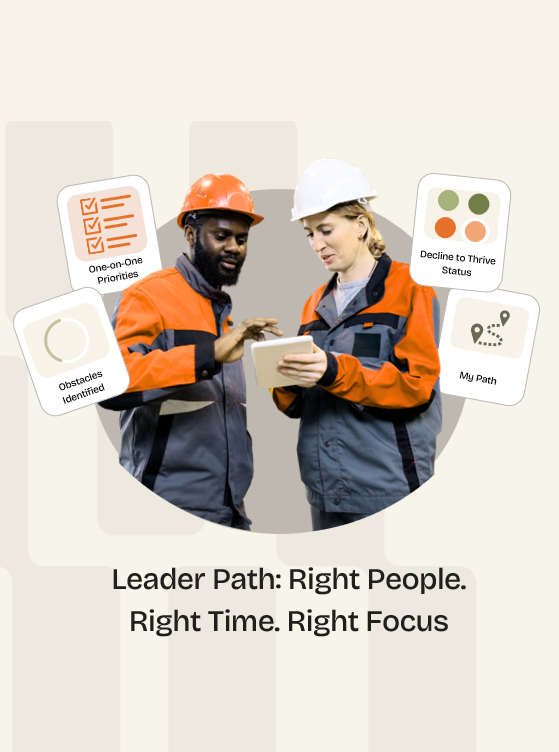
This is where NxtPath’s Leader Path comes in.
- Builds personalization into Leader Standard Work.
- Creates a prioritized daily plan for leader interactions and relationships.
- Ensures leaders practice Know, Understand, Improve.
- Helps leaders spend time where it matters most, every day.
The People Bridge in Action
Personalized leadership strengthens the People Bridge- connecting people, processes, and performance for a stronger workplace community. The result is a flywheel of value:
- Better interactions → More participation.
- More participation → Stronger processes.
- Stronger processes → Sustainable performance.
The Unique Path to Becoming An Effective Leader
We can’t change the size of the hourglass. But with the Leader Path, we can change how the sand flows by making sure every moment leaders spend with their people adds value, builds trust, and drives performance forward.
👉 Ready to see how the Leader Path evolves your Leader Standard Work? Request a Demo