 NxtPath Login

Operational consistency is when core tasks are performed reliably over time, at the same quality standard no matter who is on shift or which building they are in. Many operators believe they have consistency because they have procedures and processes in place, but the latter doesn’t necessarily lead to the former.
A procedure tells you how the work is supposed to run, not how it ran. Consistency is how it runs, over and over again.
For instance, take two shifts that hit the same number. One gets there on a tight routine. The other gets there because a supervisor stays late and an operator knows which machine needs a second look. Both look fine on the report, though one of them is a resignation away from missing targets.
What separates a stable operation from one that looks stable is catching those differences early. NxtPath™, TrailPath's workplace improvement platform, gives leaders that view.
Consistency Doesn’t Come From Headquarters
Most operations already have a standard. Someone wrote the procedure, built the training, and rolled it out. The standard is rarely the problem.
McKinsey's research on multi-site operations found that transformations are designed centrally, but operational performance is determined at the site level and often varies widely. Improvements made at one site rarely carried over to others, and the cost of poor quality climbed as rework and scrap increased.
For companies with multiple sites or that run global supply chains, those variations across shifts compound quickly. A process that drifts in one warehouse, for instance, can easily become a service failure two links downstream, and by then it’s so much harder to trace it back.
That gap is why operational consistency is important at the floor level and not just in the procedure library. It is what produces consistent results, reliable customer experiences, and numbers leaders can plan against long-term. Operational consistency is the antidote to those challenges.
How To Maintain Operational Consistency Across Shifts, Sites, and Teams
1. Give every leader the same daily routine
Gallup's research on employee engagement finds that managers account for at least 70% of the variance in team engagement. That means two teams with the same procedures may well perform differently based largely on who runs them.
Leader Standard Work is one way to fix the issue. But the challenge with that is that it’s often disconnected from the work itself and relies on the supervisor to remember it. A checklist in a binder does not survive a shift where two people called in and a trailer showed up late.
My Leader Path in the NxtPath platform puts that routine in front of the leader instead. It builds a prioritized daily list of who needs a check-in and why, drawn from signals rather than instinct. A team member whose status dropped. An action item running late. Someone who prefers frequent interactions and has not had one in two weeks.
The list works the same way for every leader in the company, which is what moves supervisors across locations in the same direction rather than each building developing its own management style. Leaders set expectations and lead by example, and putting the same routine in front of all of them is how those leadership behaviors stay consistent across the organization.
2. Catch the drop before it becomes a resignation
It’s easy to miss someone who’s struggling until their resignation notice arrives. By that point, their institutional knowledge is out the door, too.
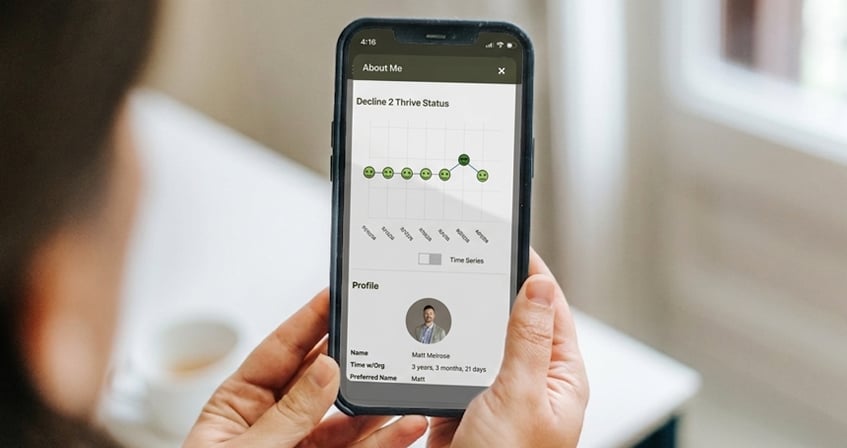
In NxtPath, team members mark where they land on a decline-to-thrive scale as part of their day. A person moving from growing to surviving shows up on their leader's path as a conversation that needs to happen.
It also gives a team member a way to signal they need help without having to open that conversation cold. Clear, stable expectations reduce the workplace stress of not knowing where you stand, and that helps create an environment where people don’t want to leave.
3. Build a real channel for problems from the floor
An open-door policy is not a guarantee that team members will communicate openly. What works is a structured way to raise an obstacle or an idea, paired with a leader expected to close the loop.
Obstacles and Ideas in NxtPath is where a team member flags something blocking the work, suggests an improvement, or recognizes a coworker. Each one goes to a leader with a record of who raised it and when, so it can be worked and closed rather than absorbed into a conversation nobody wrote down.
This is also where continuous improvement stops being a program and becomes standard practice, since the people closest to the work are the ones identifying what needs to change. Consistent communication reduces execution variability across locations.
4. Standardize how problems get solved, not just how work gets done
Problem solving on a running floor competes with everything else happening that hour. Under pressure, the fastest fix often wins, but that doesn’t mean the root cause of the issue was addressed.
Charlie's Checklist walks leaders and team members through the same sequence every time: what is known about the issue, why it is a problem, what should be happening instead, and what action follows. The conversation ends with an assigned action item, so accountability for the follow-up is clear before anyone leaves the floor.
Standard operating procedures eliminate guesswork in routine tasks. Consistent processes for solving problems do the same thing one level up.
5. Stop improvement work from evaporating
Commitments made in a meeting have a short half-life. The ones that survive usually belong to whoever felt strongest about them in the room, and that person eventually moves to another shift, another site, or another company.
Behavior drifts without reinforcement, and so does process. The cycle that holds is standardize, execute, check, improve, and re-standardize, and most organizations lose the thread at that last step.
Action items in NxtPath pool into one list for the person responsible, whether they came from an obstacle, a project, a goal, or a meeting. Leaders can see what's moving and what has come to a standstill, so the improvement outlives the person who suggested it.
6. Put development in the flow of work
Eight hours of training one month can be completely forgotten about by the next. Short and frequent beats long and annual, every time.
The NxtPath People Development tools run in modules people work through alongside the job instead of off the floor for a day, plus a separate track on what the same material means for someone leading a team. And that supports a workforce that’s growing and participating every day of the year.
New employees benefit most. Onboarding against the same material everyone else uses means they learn the standard as written rather than as their trainer happens to perform it, and training reinforces the behaviors and outcomes you want repeated.
7. See patterns, not just individual incidents
A single obstacle looks like a bad day. Ten of them across three sites, all pointing at the same handoff, look like a process that stopped matching the work.
The Visibility Center puts participation, interaction timeliness, obstacle resolution throughput, and retention in one organizational view. Stable processes are what make that data usable, since teams get compared against the same criteria rather than against their own history.
That comparability is what makes intelligent decision-making possible across an organization instead of guesswork at each site. Tracking key metrics helps you spot problems early, and consistency improves fastest when you focus on the handful of high-impact behaviors that move everything else.
What This Looked Like at One 3PL Company
Seven ideas on a page are easy to agree with. Here's what they looked like in a working operation.
States Logistics Services is an employee-owned 3PL based in Buena Park, California. They came at this problem from an angle most operations would not expect.
They were already paying competitively. They already offered flexible scheduling. Turnover was still higher than leadership wanted, and the levers they controlled were not moving it. What they could not see was whether their leaders were consistently showing up for their teams.
A few things changed in how the operation runs day-to-day:
- Kiosks went in so team members without a desk or company device could check in during their shift
- Leaders get daily notifications rather than a weekly report
- Coaching conversations run on a set cycle instead of when someone remembers
- Leaders check the data before walking the floor instead of guessing at what is on someone's mind
States has since rolled NxtPath out across all eight of its facilities.
Start With What You Can See
None of this requires a company-wide implementation on day one. Start with one site or one group of frontline leaders, somewhere close enough to see what happens, then scale what survives contact with the floor. States began at a single facility before extending to all eight.
Two things separate a pilot that spreads from one that stalls. Someone has to own the routine before it starts, because a practice without an owner gets postponed until the quarter ends. And the tools have to give a supervisor something to act on that day. A platform that mostly produces reports for headquarters rarely changes what happens between a leader and a team.
NxtPath doesn't replace Lean or continuous improvement work. Those programs assume the process runs the same way twice, and this is what holds that assumption up after the kickoff meeting ends.
See how NxtPath helps operations leaders maintain operational consistency across every shift and site. Schedule a demo today.